Investing in Spanish Real Estate in 2026: What You Need to Know

Spanish real estate attracts investors with the opportunity to earn rental income, preserve capital in a tangible asset, and benefit from potential property value appreciation over time. However, buying an apartment does not automatically mean that the investment will be profitable.
The outcome depends on the purchase price, property location, maintenance costs, taxes, rental demand, and the investor’s strategy. A seaside apartment, a property in a major city, and real estate in a developing area can deliver very different results even with the same budget.
In 2026, investing in Spanish real estate requires a clear financial plan. It is important to determine in advance what matters most to you: regular income, potential property value appreciation, or a combination of both goals.
Let’s explore the available investment strategies, how to choose a property, calculate returns, and avoid common mistakes.
Why Investors Choose Real Estate in Spain
Spain is attractive both to private investors and to buyers who plan to use the property as their own residence in the future.
The market has several characteristics worth considering when choosing a property.
A variety of regions. Depending on the budget, investors can consider major cities, coastal areas, tourist destinations, and smaller towns. Each option has its own price trends, demand patterns, and rental market characteristics.
The opportunity to earn rental income. If a property is selected based on demand, expenses, and the target tenant audience, it can generate regular income. However, the actual result depends on occupancy, rental rates, and the owner’s expenses.
Potential property value appreciation. In some areas, real estate prices may increase due to infrastructure development, growing demand, and limited supply. However, appreciation is not guaranteed, and property values may also decline.
Different investment strategies. Investors can purchase a ready-to-move-in apartment, a new-build property, or real estate that requires renovation. Each option involves different costs, timelines, and levels of risk.
It is important not to treat the Spanish market as a single uniform market. Investment results in Madrid, Valencia, Torrevieja, or Benidorm can vary significantly. Even within the same city, much depends on the specific neighbourhood and the property’s characteristics.
What Investment Strategies Are Available in the Spanish Real Estate Market
Before searching for a property, determine how you plan to generate returns. This will influence your choice of region, property type, and acceptable level of expenses.
1. Buying Property for Long-Term Rental
This strategy involves purchasing an apartment or house and renting it out to tenants for an extended period.
The main goal is to generate regular rental payments. This option may suit investors who want to build an additional income stream and are prepared to own the property for an extended period.
When choosing a property, consider access to public transport, the availability of jobs, educational institutions, and everyday amenities. For long-term rentals, a neighbourhood’s appeal to permanent residents is often more important than its popularity with tourists.
When calculating returns, account for periods without tenants, property maintenance, taxes, insurance, and management expenses.
2. Buying Property for Seasonal or Tourist Rentals
Tourist rentals may be attractive in areas with a steady flow of visitors. These include certain coastal destinations and popular tourist cities.
However, a high nightly rental rate does not guarantee high annual profits. Seasonality, cleaning, maintenance, booking management, and periods of vacancy must all be taken into account.
In addition, tourist rentals are subject to specific requirements that may vary by autonomous community and municipality. Some areas impose restrictions on tourist accommodation, and owning an apartment in a tourist district does not automatically mean that it can legally be used for this type of rental.
Before purchasing, check the current requirements that apply to the specific property.
3. Buying a New-Build Property with the Aim of Capital Appreciation
An investment strategy can be based not only on rental payments but also on the potential increase in property value.
An investor purchases a property during construction or before the project is completed, expecting its market value to increase by the time it is delivered or over the following years.
The outcome depends on the entry price, contract terms, construction timeline, project characteristics, and conditions in the local market.
Future appreciation is not guaranteed. Construction delays, changes in market conditions, and declining demand are all possible.
Before purchasing, research the developer, the project’s legal documents, the payment schedule, the contract terms, and the expected expenses before the keys are handed over.
4. Buying Property to Renovate and Resell
Some investors purchase properties that need updating, aiming to increase their value through renovation and subsequent resale.
This strategy requires particularly accurate calculations. The purchase price, renovation costs, taxes, professional fees, renovation timeline, and possible delays must all be considered.
If expenses exceed the initial budget or the sale takes longer than expected, the anticipated profit may decrease significantly.
This option is suitable for those who are prepared to manage the project actively or can hire specialists to assess the property’s condition and supervise the renovation.
Where to Look for Investment Property in Spain
Your choice of region should depend on your investment objective, not just on how popular the location is.
Valencia
Valencia may appeal to investors looking for a combination of urban infrastructure, a permanent population, and rental demand.
When choosing a property, compare neighbourhoods based on transport links, proximity to universities and workplaces, building condition, and the prices of comparable properties.
It is important to analyse the specific location: figures for one neighbourhood do not necessarily reflect the situation in another.
Torrevieja
Torrevieja attracts buyers with its coastal location, Mediterranean climate, and the opportunity to consider property for both personal use and rental income.
When buying for investment purposes, identify your target audience: permanent residents, seasonal tenants, or people staying for extended holidays.
You should also consider seasonal demand, the building’s condition, comunidad de propietarios fees, and the rental rules that apply to the property.
Benidorm
Benidorm is known for its tourist appeal and large number of apartment buildings. Investors may find opportunities here in properties for personal use as well as real estate intended for rental.
However, when comparing listings, do not focus only on proximity to the beach. The building’s condition, floor area, layout, maintenance costs, competition from similar properties, and legal requirements for the intended rental model are also important.
The key principle when choosing a region is to compare specific properties using the same financial model. A city’s popularity is no substitute for calculating returns.
How to Calculate Real Estate Returns in Spain
Before purchasing, it is important to understand how much income a property could potentially generate and which expenses will reduce the final result.
For an initial assessment, investors use ROI — Return on Investment.
Gross Yield
Gross rental yield shows the ratio of annual rental income to the property’s purchase price.
Formula:
Gross yield = annual rental income ÷ property value × 100%
For example, an apartment costs €180,000 and its potential rental income is €12,000 per year.
Gross yield:
12,000 ÷ 180,000 × 100% = 6.67%.
This is an initial indicator. It does not account for taxes, maintenance, repairs, insurance, management, or potential periods without tenants.
Net Yield
Net yield takes into account the expenses associated with owning the property and generating rental income.
For an initial calculation, you can use the following formula:
Net yield = annual income after operating expenses ÷ total initial investment × 100%
Operating expenses may include:
- comunidad de propietarios fees
- IBI property tax and other applicable taxes
- property insurance
- repairs and maintenance
- property management services
- tenant acquisition costs
- lost income during vacancy periods
Total initial investment should ideally include not only the property price but also purchase taxes, transaction costs, and other mandatory expenses.
For an accurate calculation, the tax burden should be assessed separately based on the investor’s tax status and the type of rental activity.
Why You Should Not Rely Solely on Promised Returns
Suppose a seller or agency states that a property can generate an annual return of 8%. Before making a decision, find out how this figure was calculated.
It may refer to gross yield calculated on the assumption that the property is fully occupied. After accounting for expenses and periods without tenants, the actual result may be significantly lower.
Therefore, ask for the underlying figures: the expected rental rate, the number of paid rental months, operating expenses, and the method used to calculate the return.
What Expenses Investors Need to Consider
When investing in real estate, you need to calculate not only the property price but also the costs of acquisition, ownership, and eventual resale.
Purchase Costs
Depending on the property type and transaction terms, the following expenses may arise:
- ITP tax when purchasing a resale property, or IVA and generally AJD when purchasing a new property
- notary fees
- property title registration
- legal assistance
- property inspection services
- bank charges if a mortgage is used
The amount of tax depends on the region and type of transaction. Before purchasing, obtain a calculation specific to the property you are considering.
Costs During Ownership
After purchasing, the owner usually pays for property maintenance, utilities, insurance, and mandatory building-related fees.
If the apartment is rented out, additional expenses may include management, servicing between guest stays, tenant acquisition, and repairs.
The cost structure for tourist rentals may differ from that of long-term rentals. Therefore, the financial model should reflect the chosen strategy.
Costs When Selling
If you decide to sell the property in the future, consider potential costs for intermediary services, transaction formalities, and taxation on capital gains.
In addition, the sale may take longer than expected. If you need money urgently, you may have to reduce the asking price.
Therefore, when evaluating an investment, consider not only potential income but also your ability to exit the project.
What Risks Are Involved in Investing in Spanish Real Estate
Real estate can be a long-term asset, but that does not mean property investments are risk-free.
Changes in market prices. A property’s value may rise, remain stable, or decline. Historical price growth does not guarantee future results.
Insufficient rental demand. Even in a popular region, a specific apartment may attract fewer tenants because of its location, condition, or high price.
Unexpected expenses. Renovations, problems with building systems, and major building works can significantly increase the owner’s costs.
Regulatory changes. Requirements for rentals, taxation, and property use may change. Tourist rental rules require particular attention.
Low liquidity. Selling real estate usually takes time, and a quick sale may require a price reduction.
Currency and financial risks. If an investor’s income and expenses are in different currencies or the purchase is financed with a loan, exchange-rate and interest-rate changes may affect the outcome.
To reduce risks, do not invest all your available capital in a single property without maintaining a financial reserve. Calculate several scenarios and determine in advance the conditions under which the investment would no longer meet your expectations.
How to Check a Property Before Investing
Before signing a contract, make sure that the property matches its stated characteristics and is suitable for your chosen strategy.
First, check the following:
- Ownership rights. Make sure the seller has the legal right to dispose of the property.
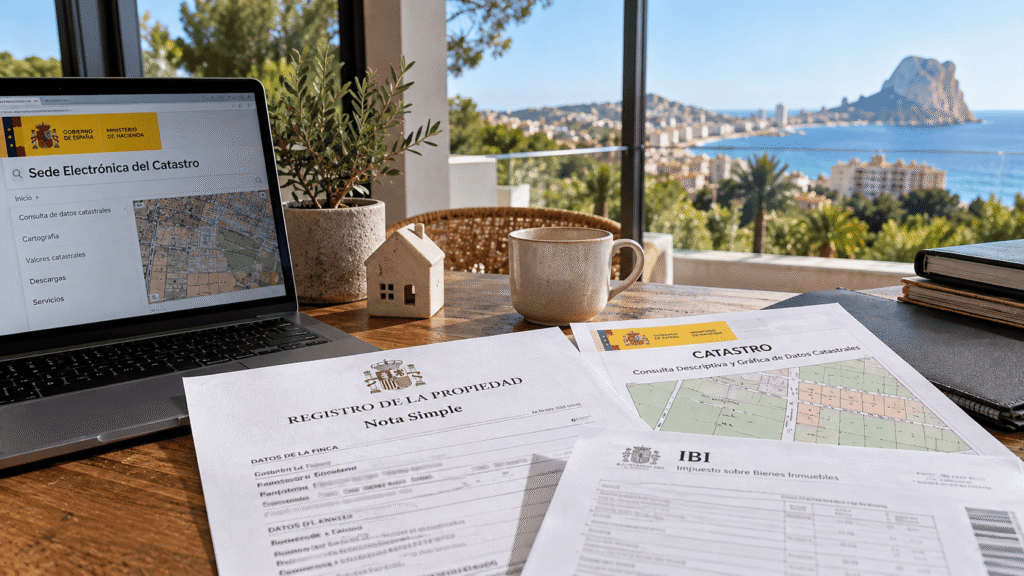
- Nota Simple. Review the registry information and any registered encumbrances.
- Catastro records. Compare the property’s cadastral characteristics with the available documentation.
- Property condition. If necessary, arrange a technical inspection and an assessment of future renovation costs.
- Outstanding debts. Check for unpaid IBI, comunidad de propietarios fees, and other obligations that could affect the transaction.
- Rental eligibility. Check the current requirements for the intended rental type and any restrictions applicable to the specific property.
- Contract terms. Carefully review the price, deadlines, payment procedure, and consequences of withdrawing from the transaction.
If you are buying a new-build property, also check the developer’s documents, the project’s permits, the construction schedule, and the payment terms.
A detailed guide to checking a property before purchase is covered in a separate Spanish Life article.
Is It Worth Buying Investment Property with a Mortgage
A mortgage allows you to purchase a property without paying its entire price from your own funds. However, a loan increases your financial obligations and changes the return calculation.
Before purchasing, consider the down payment, interest rate, monthly payment, fees, and other loan-related expenses.
It is important to assess whether rental income can cover expenses even during vacancy periods. Do not base your financial model on the assumption that the apartment will always be occupied and rental rates will never change.
If you are not a resident of Spain, lending terms may differ from those offered to residents. The bank assesses the borrower’s income, liabilities, documents, and financial situation.
A mortgage can increase the potential return on equity, but it also increases the risk of losses. Therefore, make a borrowing decision after calculating several scenarios rather than simply relying on the maximum loan amount available.
What Property Should You Choose for Investment in 2026
There is no universal property that suits every investor. The choice depends on your budget, risk tolerance, investment horizon, and how actively you are prepared to manage the property.
If your priority is regular income, consider properties with stable long-term rental demand and predictable expenses.
If your goal is potential capital appreciation, analyse the entry price, neighbourhood development, project characteristics, and demand for comparable properties.
If you are considering a coastal property, determine whether it will be used for personal living, long-term rental, or tourist accommodation. These models have different economics and different requirements.
When comparing properties, pay attention to:
- the total acquisition cost, including taxes and transaction fees
- realistic rental income
- net yield after expenses
- property condition and potential renovation costs
- liquidity and demand for comparable properties
- restrictions related to renting out and using the property
- the possibility of selling the property within your desired timeframe
Do not make a decision based solely on forecasts of price growth or promises of high returns. It is better to choose a property whose financial model remains acceptable even under a less favourable scenario.
Investor Checklist Before Buying Property in Spain
Before investing your money, go through the main points.
- The investment objective and ownership period have been defined
- A budget has been set, including additional expenses
- A region has been selected and property demand has been researched
- The owner, registry details, and encumbrances have been checked
- The property’s technical condition has been assessed
- Gross and net yields have been calculated
- Taxes, maintenance, repairs, and possible vacancy periods have been accounted for
- Requirements for the chosen rental type have been checked
- The contract terms and consequences of withdrawing from the transaction have been reviewed
- If a mortgage is used, the financial obligations have been calculated
- A reserve for unexpected expenses has been set aside
- The risks and potential terms for selling the property in the future have been assessed
If reliable information is unavailable for several key points, it is better to postpone the decision until the checks are complete.
Conclusion: How to Invest in Spanish Real Estate Wisely
Investing in Spanish real estate can be part of a long-term financial strategy, but the outcome depends on the quality of the selection and the accuracy of the calculations.
It is important to understand where the income will come from, what expenses you will have to cover, and which risks you are prepared to accept. The purchase price, location, rental demand, and legal restrictions should be assessed together.
The main rule for investors is to calculate returns and check the property first, then make the purchase decision.
If you plan to invest in Spanish real estate in 2026, start by defining your budget and investment objective. You can then compare suitable regions, build a financial model, and select properties that meet your criteria.



We will answer any question!


Online purchase
More details