Is it possible to purchase property in Spain remotely?

You do not need to be physically present in Spain throughout the process to buy an apartment or house there. Foreign buyers can arrange a property purchase from abroad, prepare documents remotely, and appoint a representative to handle the legal formalities.
This is particularly convenient if you live in another country, are purchasing property as an investment, or want to avoid travelling to Spain several times during the buying process.
However, a remote property purchase requires careful preparation. You need to check the property, prepare the necessary documents, agree on the payment arrangements, and make sure your representative has the authority to act on your behalf.
Let’s look at how to buy property in Spain remotely, which documents you will need, how a power of attorney works, and what to consider to reduce potential risks.
Can You Buy Property in Spain Without Travelling There?
Yes, it is possible to buy property in Spain remotely. A buyer can appoint a representative to act on their behalf under a notarised power of attorney.
Depending on the terms of the transaction, the representative may sign a preliminary agreement, make or arrange the required payments, sign the notarised deed of sale and purchase, and carry out other agreed actions.
It is important, however, to distinguish between arranging a property purchase remotely and completing every procedure entirely online. Not every step can be handled digitally. For example, a bank may require you to attend in person for identity verification, while arranging a power of attorney may require a personal appointment with a notary or a visit to a Spanish consulate.
It is therefore best to determine the procedure in advance, taking into account the buyer’s country of residence, the requirements of the bank and notary, and the specific property.
How to Buy Property in Spain Remotely: A Step-by-Step Guide
Step 1. Choose a Property and Check Its Legal Status
The first stage is much the same as in a standard property purchase. You determine your budget, choose a region and a suitable property, review its features, and agree on the terms with the seller or real estate agency.
You can arrange a virtual viewing, request photographs and documents, discuss the property’s condition, and obtain additional information about the neighbourhood.
However, you should not make a decision based on photographs alone. If you cannot inspect the property in person, you can hire an independent professional to visit it, assess its condition, and identify any potential issues.
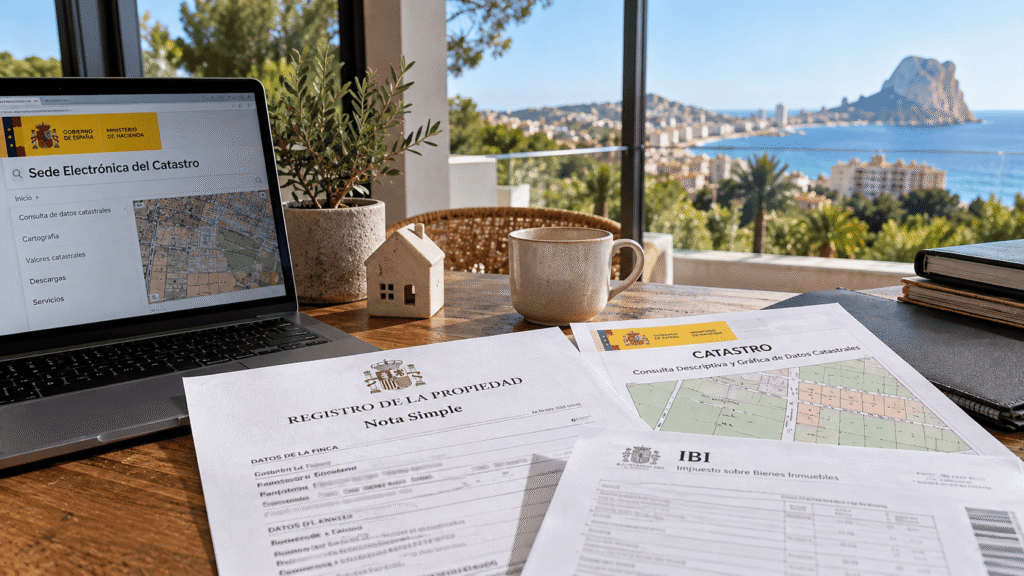
Before paying a deposit, you should check the property’s legal status, confirm the seller’s ownership, and identify any encumbrances or outstanding debts. One document used for this purpose is the Nota Simple, an extract from the Spanish Land Registry.
If discrepancies are found between the documents and the property’s actual condition, they should be clarified before signing any agreement.
Step 2. Obtain an NIE
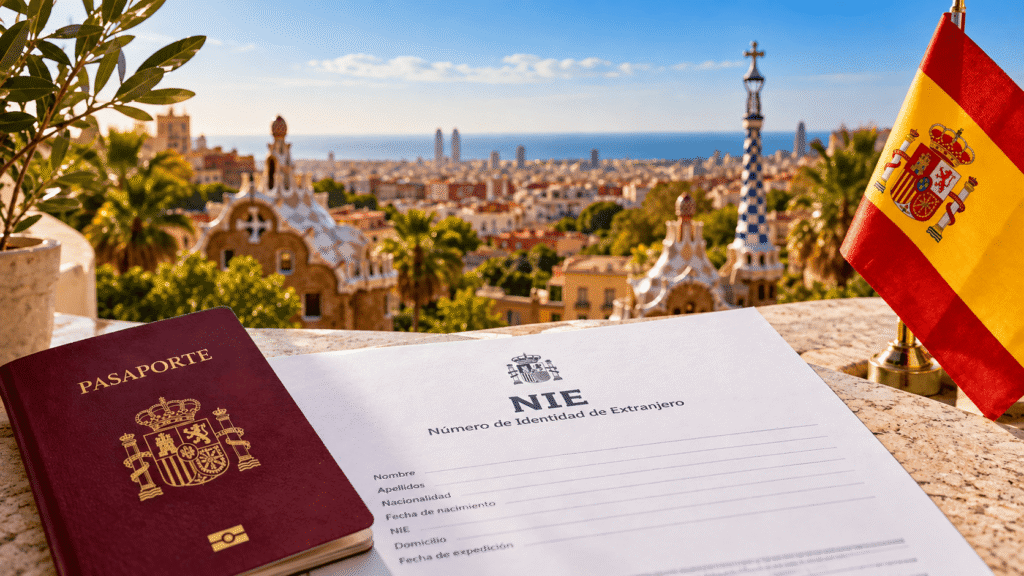
Foreign buyers will generally need an NIE — Número de Identidad de Extranjero, the identification number assigned to foreigners in Spain.
It is used for legal and financial transactions related to property purchases, as well as for fulfilling tax obligations.
If you do not yet have an NIE, you should check the application procedure in advance. Whether the documents can be obtained through a representative depends on the specific procedure and the requirements of the relevant authority.
An NIE does not, by itself, grant the right to reside in Spain. It is an identification number required for certain legal and administrative procedures.
Step 3. Grant a Power of Attorney to Your Representative
If you do not plan to travel to Spain to sign the documents, one of the key tools is a poder notarial — a notarised power of attorney.
This document authorises another person to act on your behalf within the scope of the powers granted.
Your representative could be a lawyer or another person you trust. The power of attorney must be prepared in accordance with the requirements of the intended transaction.
The document should clearly specify which actions your representative is authorised to perform. These may include signing the property purchase agreement, completing documents before a notary, dealing with public authorities, and arranging agreed payments.
You should not grant broader powers than necessary. If the power of attorney is intended for the purchase of a specific property, consider specifying the property and setting limits on the purchase price or other essential terms.
There are several ways to arrange a power of attorney:
- Before a Spanish notary in Spain. This option is suitable if you can travel to Spain to have the document prepared.
- At a Spanish consulate abroad. You can contact the Spanish consulate in your country of residence. Check in advance whether an appointment is required and which documents you need to provide.
- Before a local notary in your country of residence. In some cases, you can have the document notarised locally and then obtain an apostille or other required legalisation, along with a translation. The exact requirements depend on the country where the document is issued and where it will be used.
Before arranging the document, make sure its wording is approved by the Spanish notary or lawyer handling the transaction. This helps prevent problems if the document does not meet the requirements of the specific procedure.
Step 4. Sign the Contrato de Arras
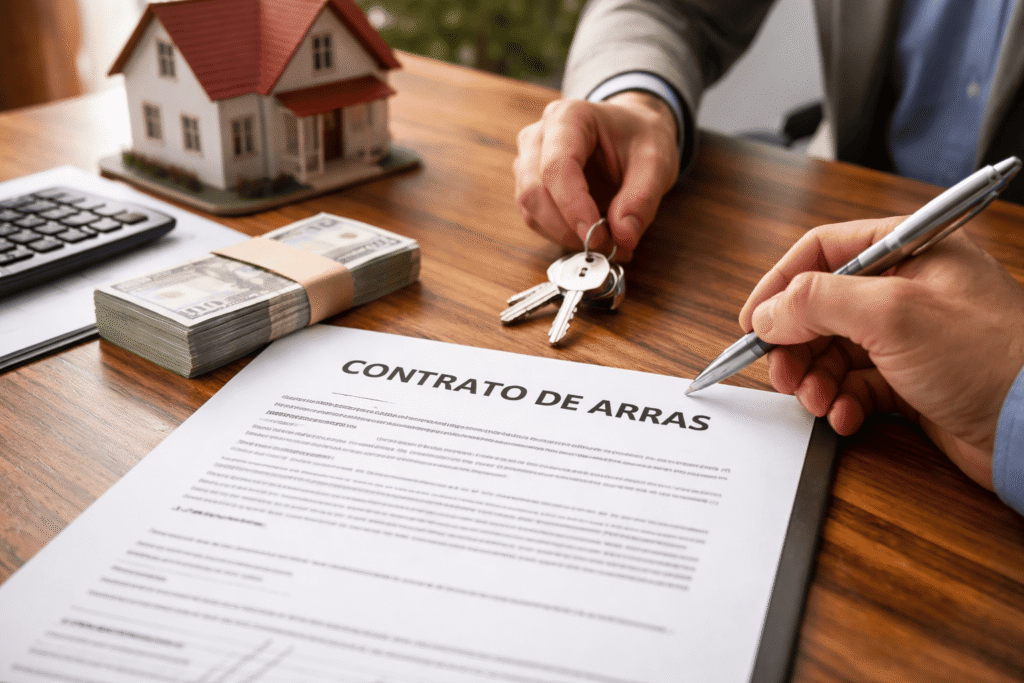
Once the property has been selected, the parties may sign a preliminary agreement known as the Contrato de Arras. It sets out the property price, the deposit amount, the deadline for completing the main transaction, and the consequences of withdrawing from the purchase.
If you are buying property remotely, you should determine in advance who will sign this document and how it will be signed.
Before paying the deposit, check which type of arras is specified in the agreement and under what circumstances the money can be refunded. If the purchase depends on obtaining a mortgage, it is also advisable to agree on the relevant conditions in advance.
Do not transfer a deposit based solely on messages or a verbal promise from the seller. The terms of the transaction should be documented in writing, and the recipient of the payment should be verified.
Read more about this stage in our article on the Contrato de Arras in Spain.
Step 5. Arrange the Property Payment
The payment arrangements should be agreed upon before the main purchase agreement is signed. The buyer needs to know how the remaining balance will be transferred, when the payment must be made, and which confirmations will be required.
If you are outside Spain, check the bank’s requirements for transferring funds, verifying your identity, and confirming the source of the money.
The bank may request documents proving the source of funds, such as income records, bank statements, or documents relating to the sale of other assets. The exact list depends on your circumstances and the financial institution’s requirements.
If you plan to use a Spanish mortgage, completing the transaction remotely may be more complicated. The bank determines its own requirements for borrowers, document verification, and signing the mortgage agreement.
Do not assume that having a power of attorney automatically allows you to complete all banking operations without being personally present. This must be agreed with the bank before the transaction is completed.
Step 6. Sign the Notarised Deed of Sale and Purchase
The main stage of the transaction is the execution of the escritura pública de compraventa, the notarised deed of sale and purchase.
If the buyer is not present in person, their representative may sign the deed, provided the power of attorney grants the necessary authority and is accepted by the notary.
Before signing, the notary verifies the identity and authority of the parties, the property documents, and other legally relevant details.
If the purchase involves a mortgage, additional documents and separate powers of attorney may be required to arrange the loan and register the property as collateral.
Ask the notary in advance which documents must be provided, the format in which they should be prepared, and which actions your representative will need to carry out.
Step 7. Pay the Taxes and Register the Property
After the transaction is completed, you must fulfil the tax obligations associated with the purchase and arrange registration of the ownership rights with the Registro de la Propiedad (Land Registry).
The required procedures and tax amounts depend on the type of property and the region. Purchases of resale properties are generally subject to ITP, while purchases of newly built properties from a developer are subject to IVA and, in most cases, AJD. The applicable rates and conditions should be checked for the relevant autonomous community and the date of the transaction.
After the purchase, keep the documents confirming payment, registration of ownership, and fulfilment of your tax obligations.
Some subsequent procedures can be handled by your representative, notary, or legal professional. However, you should establish in advance who is responsible for each stage and how you will receive confirmation that the required actions have been completed.
What Documents Do You Need to Buy Property Remotely?
The exact list depends on the buyer’s citizenship and country of residence, the details of the transaction, and the requirements of the notary and bank.
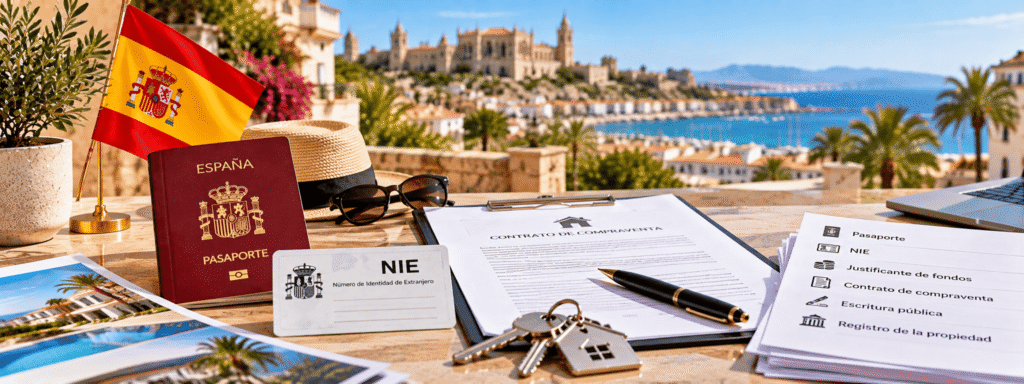
You should generally prepare the following:
- A valid passport or other identity document. This is required to verify the buyer’s identity and prepare the transaction documents.
- NIE. The foreigner identification number required for the relevant legal and tax procedures.
- Details of the representative. Information about the person who will act on your behalf.
- A notarised power of attorney. The document must grant the powers required for the specific transaction.
- Property documents. The property address, registration details, Nota Simple, and other materials needed to verify the property.
- Proof of the source of funds. This may be required by the bank or other parties involved in the transaction.
- Payment and tax documents. The exact requirements depend on the payment method and the circumstances of the purchase.
If your documents were issued abroad, check in advance whether an apostille, legalisation, or sworn translation into Spanish is required.
How Much Does It Cost to Buy Property Remotely?
Buying property remotely does not exempt you from the standard costs associated with a property purchase. In addition to the price of the apartment or house, you need to budget for taxes, notary fees, registration, and other transaction-related expenses.
Additional costs may include preparing the power of attorney, translating and legalising documents, and paying for the services of a lawyer, representative, or property inspection specialist.
The total amount depends on the property price, the region, the type of property, and the method used to complete the transaction.
Before proceeding with the purchase, it is advisable to request a detailed breakdown of the costs. This should separately list mandatory taxes and fees, professional services, and any additional expenses related to completing the transaction remotely.
What Are the Risks of Buying Property from Abroad?
Buying property remotely can save time on travel, but it requires careful organisation of the transaction.
Insufficient property checks. Photographs and virtual viewings do not always reveal the true technical condition of an apartment. Arrange an independent inspection if necessary.
Errors in the power of attorney. If the powers are too limited or the document does not meet the notary’s requirements, the transaction may be delayed. It is best to agree on the wording in advance.
Transferring money to the wrong recipient. Before making a payment, verify the bank details and the legal basis for receiving the funds. Do not change payment details solely in response to an unexpected email or message without independently confirming the change.
Unsuitable Contrato de Arras terms. If the agreement does not provide the necessary conditions for refunding the deposit, the buyer may suffer financial losses if the transaction falls through.
Unbudgeted taxes and expenses. In addition to the property price, buyers need to account for taxes, notary fees, registration costs, and professional services.
Insufficient follow-up after the purchase. Once the transaction is complete, make sure you receive copies of the signed documents, payment confirmations, and information confirming registration of ownership.
To reduce risks, allocate responsibilities between the parties, agree on deadlines in advance, and keep written confirmation of every important step.
Can You Buy Property in Spain Remotely with a Mortgage?
Yes, it is possible, but the conditions depend on the bank and the borrower’s circumstances.
The bank may request documents relating to income, employment, existing loans, financial commitments, and the source of funds. If the buyer lives outside Spain, the list of documents and the requirements for preparing them may differ.
You should also clarify which stages the bank allows you to complete remotely, which documents can be signed through a representative, and whether you will need to be present in person for identity verification or mortgage formalities.
A power of attorney for purchasing property does not automatically include the authority to obtain a mortgage. If the transaction involves financing, the relevant powers must be agreed in advance with your lawyer, notary, and bank.
It is not advisable to sign a preliminary agreement and pay a deposit until you understand how realistic it is to obtain the required financing and what the consequences would be if the bank rejects your application.
Checklist Before Buying Property Remotely
Before transferring money or arranging a power of attorney, check the following:
- The property has been selected, and up-to-date information about it has been obtained
- The owner, registration details, and any possible encumbrances have been checked
- An independent inspection of the apartment or house has been arranged, if necessary
- The NIE has been obtained, or the application procedure has been established
- A representative has been selected, and their details have been verified
- The wording of the power of attorney and the scope of the powers granted have been agreed upon
- The requirements for an apostille, legalisation, and document translation have been clarified
- The Contrato de Arras terms and the consequences of withdrawing from the transaction have been checked
- The payment procedure and the recipient’s bank details have been agreed upon
- The bank’s requirements have been clarified if a mortgage is involved
- Taxes, notary fees, and additional expenses have been calculated
- Responsibility for registration and post-purchase tax procedures has been assigned
- Arrangements have been made for receiving the signed documents and confirmation that the transaction has been completed
If the main terms are agreed upon in advance, buying property remotely becomes more predictable and allows you to keep track of the process even while living in another country.
Is It Worth Buying Property in Spain Remotely?
Buying property remotely can be a convenient solution for people who live outside Spain, are planning an investment, or do not want to travel to the country at every stage of the transaction.
The key is not to leave everything until the last minute. Before paying a deposit, you should check the property, agree on the contract terms, prepare the documents, and establish how representation will work.
Buying property in Spain remotely is possible if you organise the legal checks, power of attorney, payments, and property registration in advance. If you want to complete the purchase without travelling, start by choosing a suitable property and confirming the document requirements for your specific circumstances.
We will answer any question!

Online purchase
More details