Contrato de Arras in Spain: What You Need to Know Before Signing

Buying property in Spain does not usually begin with signing the final deed before a notary. Before that stage, the buyer and seller often enter into a preliminary agreement known as a Contrato de Arras. At this stage, the buyer pays a deposit, and both parties agree on the property price, deadlines, and terms of the future transaction.
At first glance, the process seems straightforward: you choose an apartment, agree on the price, and pay the deposit. However, this is precisely the stage at which you need to check the documents and contractual terms carefully. If the transaction does not go ahead, the consequences may be more serious than simply losing time.
Let’s look at what a Contrato de Arras is in Spain, which types of agreements exist, how much buyers usually pay as a deposit, and what to check before signing.
What Is a Contrato de Arras in Spain?
A Contrato de Arras is a preliminary agreement between a property buyer and seller. It confirms the parties’ intention to complete the transaction and specifies the agreed property price, the amount of the initial payment, and the deadline for completing the main sale and purchase transaction.
The money paid by the buyer when signing the agreement is usually deducted from the total property price. It is not an additional commission but part of the agreed purchase price.
It is important to understand that a Contrato de Arras is not simply a property reservation. Once the document is signed, both parties assume legal obligations. If either party decides to withdraw from the transaction, the consequences will depend on the contract terms and the type of arras specified in the agreement.
However, signing a Contrato de Arras is not legally mandatory. If the parties choose to enter into one, the agreement may be legally binding even before the transaction is completed before a notary.
What Types of Contrato de Arras Are There?
There are three main types of arras in Spain. They differ in the consequences that apply if the buyer or seller fails to fulfil their obligations.
Arras penitenciales
This type of agreement allows either party to withdraw from the transaction under the conditions set out in Article 1454 of the Spanish Civil Code. If the buyer withdraws, they forfeit the deposit. If the seller withdraws, they must return twice the amount received.
Arras confirmatorias
This type of arras confirms the agreement reached between the parties and the fulfilment of part of the payment obligations. The deposit is not automatically forfeited, nor is the seller automatically required to return double the amount solely under these rules. The consequences of a breach are determined by the contract and applicable law.
Arras penales
In this case, the agreement establishes a penalty for failure to fulfil contractual obligations. The consequences depend on the wording of the agreement, including whether a penalty is предусмотрed and whether a party may also demand performance of the contract.
In practice, it is particularly important to distinguish between arras penitenciales and the other types of arras. The rule requiring the buyer to forfeit the deposit or the seller to return twice the amount applies to arras penitenciales under Article 1454 of the Spanish Civil Code. It should not automatically be assumed to apply to every agreement titled Contrato de Arras.
Before signing, check not only the document’s title but also the specific clauses describing the consequences of withdrawing from the transaction.
How Much Do You Need to Pay When Signing?
The deposit amount is agreed between the parties. In Spain, buyers commonly use 10% of the property price as a reference point. However, this is common practice rather than a legally required amount.
For example, if an apartment costs €200,000, a 10% deposit would be €20,000. This amount is usually deducted from the purchase price, and the buyer pays the remaining balance when the main transaction is completed.
The terms may vary depending on the property, the agreement with the seller, and the purchase timeline. The deposit amount can be negotiated before the contract is signed.
Before transferring any money, make sure the agreement specifies:
- the exact deposit amount and payment procedure
- the recipient’s details
- the total property price
- the method and deadline for paying the remaining balance
- the conditions under which the deposit will be refunded if the transaction does not proceed
Do not transfer money based solely on a verbal agreement or a message from an intermediary. The payment terms must be documented in writing, and the transfer itself should be supported by payment records.
What Should a Contrato de Arras Include?
Review the agreement carefully before signing. It should clearly identify the parties, describe the property, specify the price, and set out the buyer’s and seller’s obligations.
1. Buyer and Seller Details
The agreement should include the parties’ full details, including their names, identification information, and any other details needed to identify them unambiguously.
If the property has multiple owners, check who must sign the agreement and in what capacity each party is acting. If the seller is represented by another person, verify that the representative has the necessary authority.
2. Property Description
The property must be described clearly enough to avoid any uncertainty about which property is being purchased.
Check the address, land registry details, cadastral reference, and whether the information matches the actual property. If the sale includes a parking space, storage room, or furniture, these items should also be listed in the agreement or its appendices.
3. Purchase Price and Payment Terms
The agreement should specify the total property price, the deposit amount, and the balance payable later.
You should also confirm how the payments will be made and when the remaining balance must be transferred. All payments should be supported by documentary evidence.
4. Deadline for Completing the Main Transaction
A Contrato de Arras usually specifies a date or deadline for completing the property sale before a notary.
Make sure the deadline is realistic. The buyer may need additional time to check the documents, arrange financing, or prepare for completion.
If the deadline needs to be changed, the amendment should be made in writing and agreed upon by both parties before the original deadline expires.
5. Conditions for Withdrawing from the Transaction
This is one of the most important sections of the agreement. Check what happens if the buyer or seller withdraws and whether any specific circumstances are covered by additional clauses.
For example, if the purchase depends on obtaining a mortgage, you should agree in advance on what happens if the bank refuses to provide financing. A mortgage refusal does not automatically entitle the buyer to a refund of the deposit. Much depends on the terms of the signed agreement.
What Happens If the Buyer Changes Their Mind?
The consequences depend on the type of arras and the terms of the agreement.
If the parties have signed an agreement containing arras penitenciales, a buyer who withdraws from the transaction will generally lose the deposit. If the seller withdraws, they must return twice the amount received.
Consider the following example.
A buyer chooses an apartment worth €180,000 and signs an agreement specifying arras penitenciales of €18,000.
If the buyer decides to withdraw without a contractual or legal basis for recovering the money, they may lose the €18,000 deposit. If the seller withdraws, they must return €36,000.
However, this mechanism cannot automatically be applied to every type of preliminary agreement. With arras confirmatorias or arras penales, the consequences may be different. Depending on the circumstances, a party may be entitled to demand performance of the contract, terminate the agreement, or seek compensation for losses.
This is why it is essential to understand the wording of the agreement before transferring any money.
Can You Get Your Deposit Back If the Bank Refuses Your Mortgage?
This is one of the issues you should resolve before signing a Contrato de Arras.
Suppose a buyer plans to pay part of the property price using their own funds and cover the remaining amount with a mortgage. They sign the agreement and pay the deposit, but the bank subsequently refuses their mortgage application.
If the agreement does not contain a clause protecting the buyer in the event of a mortgage refusal, recovering the deposit may be difficult. A bank’s refusal alone does not guarantee a refund.
To reduce this risk, you can negotiate a financing condition in advance. It should specify which documents are required to prove the bank’s refusal, the deadline for submitting them, and how the deposit will be refunded in such circumstances.
These conditions should be worded clearly and included in the agreement before it is signed. Do not assume that the seller will agree to them after receiving the deposit.
Which Documents Should You Check Before Signing?
Before paying the deposit, make sure the seller is legally entitled to sell the property and that the property information is accurate.
In particular, you should check:
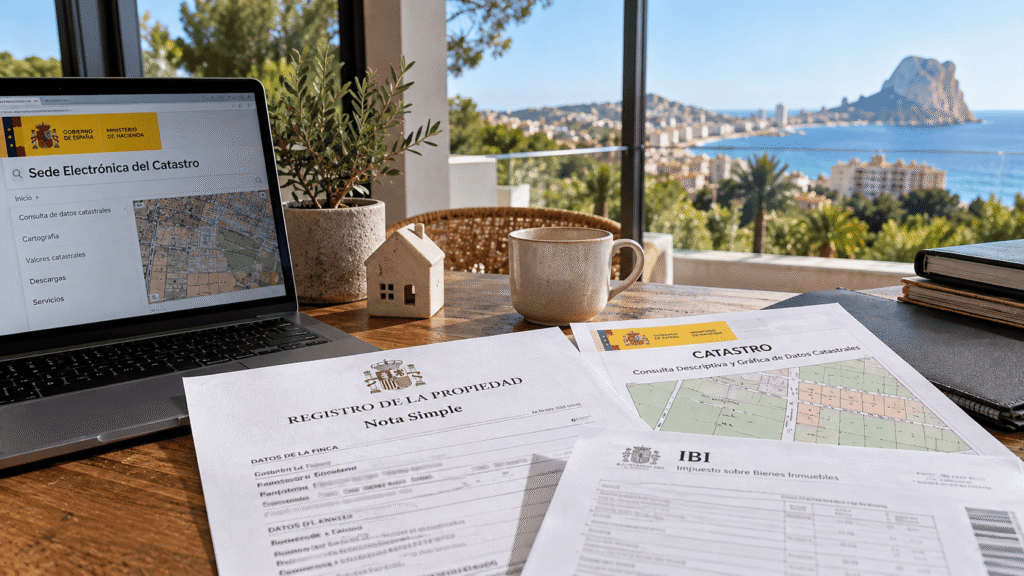
- Nota Simple — an information extract from the Registro de la Propiedad (Land Registry). It can help you verify the registered owner, property description, mortgages, attachments, and other registered encumbrances.
- Catastro records — cadastral information about the property, including its cadastral reference, area, and other characteristics.
- The seller’s ownership rights — confirm that the agreement is signed by the owner or a duly authorised representative.
- Outstanding property-related debts — check for unpaid IBI property tax, comunidad de propietarios fees, and other obligations that may be relevant to the transaction.
- The property’s legal status — where necessary, check for restrictions, planning issues, and discrepancies between the property’s actual condition and its documentation.
A Nota Simple is an important source of information, but it does not replace a full legal review of the property. If discrepancies or unclear circumstances are identified, resolve them before paying the deposit.
Checklist Before Signing a Contrato de Arras
Before signing the agreement and transferring the money, go through this checklist.
- The buyer’s and seller’s details have been verified.
- The seller’s right to dispose of the property has been confirmed.
- The Nota Simple has been obtained and reviewed.
- The property’s address, land registry details, and cadastral reference have been checked.
- Potential encumbrances and outstanding debts have been reviewed.
- The total property price and deposit amount have been specified.
- The type of arras provided for in the agreement is understood.
- The consequences of withdrawal by either the buyer or seller have been checked.
- The deadline for completing the main transaction and the payment procedure are clear.
- If a mortgage is involved, the conditions that apply if the bank refuses financing have been agreed.
- All additional agreements have been included in the written contract.
- The recipient of the payment and the conditions for transferring the money are clear.
If any key point remains unclear, do not rush into signing. A preliminary legal review will generally cost less than resolving a dispute over the deposit after a transaction falls through.
Should You Consult a Lawyer Before Signing?
A Contrato de Arras is often treated as a standard document that can simply be signed using a real estate agency’s template. However, the terms can vary considerably, and the consequences of a mistake depend on the specific wording.
An independent legal professional can review the documents, assess the risks, explain the type of arras involved, and, where necessary, negotiate terms that protect the buyer’s interests. This is particularly important if you are buying property in Spain for the first time, are unfamiliar with local legal procedures, or plan to use mortgage financing.
A notary can also provide independent legal advice. However, the preliminary agreement and the subsequent completion of the property sale before a notary are two separate stages of the transaction.
Key Takeaways About the Contrato de Arras
A Contrato de Arras is an important stage in the process of buying property in Spain. It records the agreement between the buyer and seller, establishes the deposit amount, and sets out the terms for completing the transaction.
The most important thing is not to treat this document as a mere formality. Before signing, check the property and the seller’s authority, and carefully review the payment terms, deadlines, and consequences of withdrawing from the transaction.
Do not sign a Contrato de Arras until you understand the obligations you are accepting and the circumstances in which you may be entitled to recover your deposit. If you have any doubts, seek independent legal advice before transferring the money.



We will answer any question!

Online purchase
More details