How to Check a Property in Spain Before Buying
How to Check a Property in Spain Before Buying
Buying property in Spain involves more than simply choosing an apartment or house. Before signing a contract and transferring money, it is important to make sure that the property has a clear legal status, matches its stated characteristics, and will not involve unexpected expenses after the purchase.
Even an attractive price and a good location do not guarantee that a property is suitable for purchase. It may have registered encumbrances, outstanding debts, unauthorised alterations, or restrictions on its use.
Let’s look at how to check a property in Spain before buying, which documents to request from the seller, and what to pay attention to in order to reduce the risks involved in the transaction.
Why It Is Important to Check a Property Before Buying in Spain
A property check helps you assess not only its physical condition but also its legal, technical, and financial risks.
Before buying, it is important to find out:
- whether the seller is legally entitled to sell the property
- whether there are any mortgages, attachments, or other registered encumbrances
- whether the property’s characteristics match the official records
- whether there are outstanding property taxes or payments to the comunidad de propietarios
- whether the property complies with building and urban planning regulations
- whether the property can be used for your intended purpose
- what additional expenses may arise after the purchase
This type of due diligence is particularly important for foreign buyers, as local regulations, documents, and administrative procedures may differ from those in their country of residence.
It is advisable to check the property before signing a binding preliminary agreement and transferring a substantial amount of money to the seller.
How to Check a Property in Spain Before Buying
The process can be divided into several stages: reviewing the property register, examining the seller’s documents, assessing the property’s physical condition, and estimating future expenses.
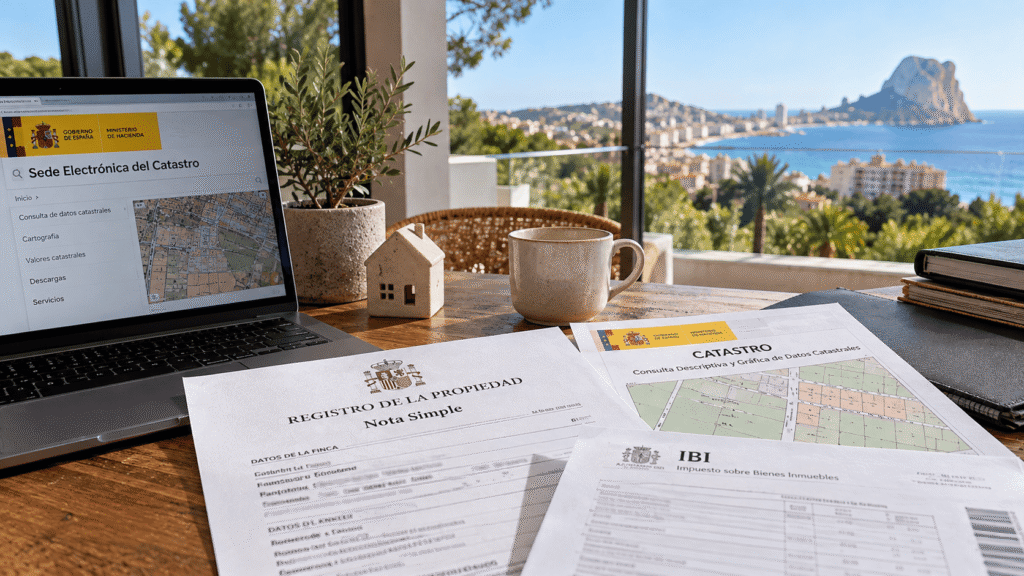
1. Obtain a Nota Simple from the Registro de la Propiedad
The first step is to obtain a Nota Simple, an informational extract from the Spanish Property Registry (Registro de la Propiedad).
This document allows you to check key information about the registered ownership rights and identify potential legal risks.
When reviewing the Nota Simple, pay attention to the following details:
- Owner — who is registered as the property owner and whether this information matches the seller’s details
- Property description — the address, property characteristics, and registered floor area
- Encumbrances — registered mortgages, attachments, easements, and other restrictions
- Third-party rights — for example, a registered right of use or usufruct
- Restrictions — special legal regimes or prohibitions, if recorded in the register
If the property has multiple owners, you need to verify each owner’s rights and determine how each will participate in the transaction.
You can obtain a Nota Simple through the official Spanish registrars’ portal: Registradores de España.
It is important to remember that a Nota Simple is an informational document. It does not replace a comprehensive legal review or confirm that every possible issue has been ruled out, particularly unregistered building violations.
2. Check for Mortgages and Other Encumbrances
If a mortgage or another encumbrance is registered against the property, you need to establish how it will be dealt with as part of the sale.
The existence of a mortgage does not necessarily mean that the transaction cannot proceed. However, before signing the documents, the procedure for repaying the outstanding debt and removing the encumbrance must be clearly established.
Ask the seller to provide documents confirming the repayment arrangements. If necessary, coordinate the procedure with the bank and the notary.
You should also check for any other restrictions that could affect the transfer of ownership or the future use of the property.
Do not rely solely on the seller’s verbal assurances that everything will be resolved after the sale. Material terms must be documented and agreed upon before the final payment is made.
3. Compare the Registro de la Propiedad and Catastro Records
In Spain, property information is held in two systems:
- Registro de la Propiedad — the register of ownership rights and registered encumbrances
- Catastro — the cadastral system containing property information for cadastral and tax purposes
These systems serve different purposes, so the information they contain may differ.
When checking the property, compare:
- the property address
- the cadastral reference (referencia catastral)
- the floor area
- the property’s designated use
- information about the land plot, if it forms part of the property
- the property’s location and boundaries, where applicable
If the floor area stated in the documents differs from the actual measurements, or if the information in the two systems does not match, you need to establish the reason for the discrepancy.
In some cases, differences may result from the way property information is recorded. In others, they may indicate an unregistered renovation, extension, or another issue.
You can check cadastral information on the official website of the Sede Electrónica del Catastro.
Matching information in the property register and the cadastre does not, by itself, guarantee that all construction work is lawful. Further checks may be necessary if there are any doubts.
4. Check for Outstanding Property Debts
Before buying, you need to find out whether there are any unpaid obligations associated with the property.
Pay particular attention to the following payments:
- IBI (Impuesto sobre Bienes Inmuebles) — the annual municipal property tax
- Comunidad de propietarios — contributions paid by property owners towards the maintenance of shared areas in a building or residential complex
- special assessments for repairs and upgrades to common areas
- unpaid utility bills, if applicable
- other obligations associated with the property
Ask the seller for proof of IBI payments and a certificate from the property manager or representative of the comunidad de propietarios confirming the status of the accounts.
In apartment buildings, it is also worth checking whether major renovation works have been approved and whether additional contributions from owners are expected.
This is important because future expenses can significantly affect the overall cost of owning the property.
Do not assume that all debts will automatically remain the seller’s responsibility. Under Spanish law, certain obligations, particularly those relating to the comunidad de propietarios, may be enforceable against the property within the limits established by law. Therefore, the procedure for settling outstanding debts must be checked before the transaction.
5. Make Sure the Property Complies with Building Regulations
The fact that a property is legally registered does not necessarily mean that all its characteristics and completed works comply with building and urban planning regulations.
This is particularly relevant for houses, renovated properties, and properties with terraces, extensions, or altered layouts.
During the review, establish:
- whether any alterations or renovation works have been carried out
- whether permits were required for these works
- whether the necessary documentation for the completed works is available
- whether the property’s actual condition matches the official documentation
- whether any restrictions or enforcement notices have been issued by the local authorities
If the property is located in an older building, you should also check whether up-to-date technical inspections are available, where required by the legislation of the relevant region.
If unauthorised alterations are discovered, it is important to establish whether the property can be brought into compliance and how much this would cost.
Documents from the local council (Ayuntamiento) and an assessment by a qualified technical specialist may be required.
6. Arrange a Technical Inspection of the Apartment or House
Even if all the documents are in order, you should check the property’s actual physical condition.
During the inspection, pay attention to:
- cracks in walls, ceilings, and other structural elements
- signs of leaks and excessive moisture
- the condition of windows, doors, and balconies
- the plumbing and drainage systems
- the condition of the electrical wiring
- heating, air conditioning, and ventilation systems
- the condition of the roof, façade, and shared building systems, where relevant to the property
For an apartment, assess not only the interior but also the condition of the building as a whole. Planned repairs to the façade, lift, or roof may result in additional costs for property owners.
If you are buying a house, particularly a detached property, consider arranging a professional technical inspection.
A specialist can identify defects that may be difficult to notice during a regular viewing and estimate potential repair costs.
7. Check the Documents Required to Use the Property
Before buying, establish whether the property complies with its designated use and whether you can use it for your intended purpose.
Depending on the type of property and the region, the following documents and information may be relevant:
- a first-occupancy licence or permit, where required
- documents confirming completion of construction
- an energy performance certificate (Certificado de Eficiencia Energética), where mandatory
- documentation confirming the legality of renovation works
- restrictions on the use of the property
- documents required to occupy the property or rent it out
Document requirements vary depending on the autonomous community, municipality, age of the building, and specific circumstances.
If you are buying an apartment for tourist rentals, check the current regional and municipal regulations separately, including registration or licensing requirements and any restrictions applicable to the specific property.
Ownership of a property does not automatically mean that tourist rentals are permitted.
8. Review the Seller’s Documents and the Terms of the Transaction
Before entering into a contract, make sure that the seller is legally entitled to complete the transaction and that the documents have been prepared correctly.
Depending on the circumstances, you should check:
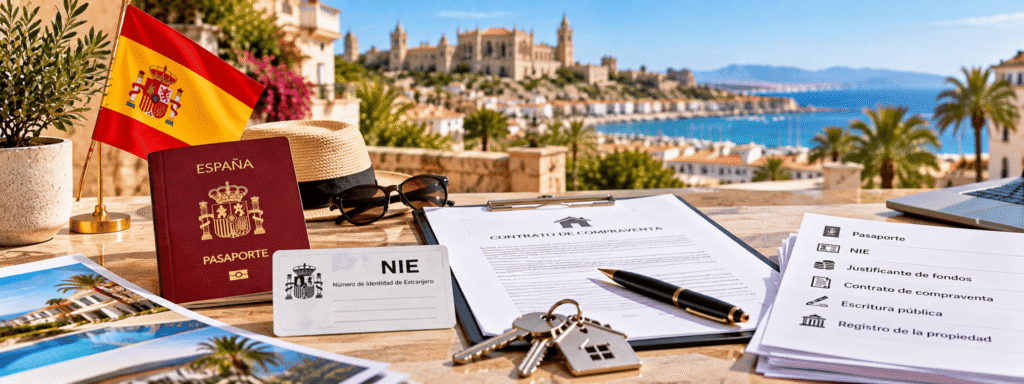
- the seller’s identity document
- whether the seller matches the registered owner
- the authority of a representative, if the transaction is conducted through an authorised agent
- any required consent from other owners
- inheritance records or other documents establishing how the property was acquired, where relevant
- the terms of the preliminary agreement and final payment
If you are signing a Contrato de Arras, carefully review the conditions for returning or forfeiting the deposit, the deadline for completing the main transaction, and the consequences of withdrawing from the agreement.
Before paying a deposit, establish which actions the seller must complete, which documents they are required to provide, and what will happen if the identified problems cannot be resolved.
If significant risks are identified, consider asking an independent lawyer to review the documents and contractual terms.
Which Documents Should You Request from the Seller?
You can use the following list when preparing to buy a property.
| Document or Information | What to Check |
|---|---|
| Nota Simple | The owner, registered ownership rights, and encumbrances |
| Cadastral information | Property identification, floor area, and designated use |
| Ownership documents | The basis on which the property was acquired and the seller’s right to dispose of it |
| Proof of IBI payments | Whether any municipal property tax is outstanding |
| Comunidad de propietarios certificate | The status of payments and any outstanding debts |
| Renovation documentation | The legality of alterations and the relevant permits, where required |
| Building technical documents | Information about inspections and necessary works |
| Energy performance certificate | The property’s energy efficiency, where the certificate is mandatory |
| Property-use documents | Compliance with requirements for occupation or the intended use of the property |
| Draft contract | The price, deadlines, payment arrangements, and the parties’ responsibilities |
Not every document is mandatory for every transaction. The final list depends on the type of property, its history, and the requirements of the relevant region.
What Are the Risks of Buying Property Without Checking It?
Skipping the due diligence process can lead to problems that only become apparent after the contract has been signed or ownership has been transferred.
The most common risks include:
- Legal issues — encumbrances, restrictions, or third-party rights that must be taken into account
- Additional expenses — outstanding debts, special owner contributions, or unplanned repairs
- Building violations — alterations and extensions that require separate legal resolution
- Restrictions on use — an inability to carry out the intended rental or other use of the property
- Documentation errors — discrepancies in floor area, designated use, or other property characteristics
These risks do not necessarily mean that you should abandon the purchase. The important thing is to establish their causes, assess the potential consequences, and make a decision based on the available documentation.
In some cases, the issue can be resolved before the transaction. In others, it may be more reasonable to renegotiate the purchase terms or choose another property.
Who Can Check a Property in Spain?
Buyers can request some documents themselves and review the available information. However, a comprehensive property check requires consulting multiple sources and understanding local requirements.
Depending on the property, you may need assistance from:
- Property lawyer — to review ownership rights, contracts, encumbrances, and legal risks
- Architect or technical specialist — to assess the building’s condition and the legality of construction work
- Notary — to complete the transaction and carry out the notarial procedures required by law
- Tax adviser — to assess tax liabilities and expenses associated with the purchase
The notarial procedure does not replace every aspect of the preliminary due diligence that a buyer may consider necessary. When purchasing property, it is therefore important to establish in advance who is responsible for checking each aspect of the transaction.
Property Purchase Checklist for Spain
Before signing the contract and making the final payment, make sure that the key issues have been addressed.
- An up-to-date Nota Simple has been obtained
- The owner and registered encumbrances have been checked
- The Registro de la Propiedad and Catastro records have been compared
- Outstanding IBI and comunidad de propietarios payments have been checked
- Building documents and the history of renovations have been reviewed
- The property’s physical condition has been inspected
- The documents required to use the property have been checked
- Future maintenance and repair costs have been assessed
- The terms of the Contrato de Arras and the main transaction have been reviewed
- Independent legal and technical assessments have been obtained, where necessary
This checklist helps organise the due diligence process but does not replace an individual assessment of the specific property.
Property Due Diligence in Spain with Spanish Life
At Spanish Life, we help clients find property in Spain based on their budget, purchase objectives, and preferred location.
When choosing an apartment, house, or investment property, it is important to consider not only the price and location but also the documentation, the condition of the building, and the potential expenses after purchase.
If you are planning to buy property in Spain, submit an enquiry to Spanish Life. We will help you find options that match your requirements and guide you through the next steps of the purchase process.
We will answer any question!


Online purchase
More details